
Patriotism Means protecting our communities
ICE is terrorizing our neighbors but veterans are fighting back
We are proud to be helping activate veterans and military families across the country to join protests against ICE terrorizing our communities.
Below are some tips to help make sure you have everything you need when you’re out doing your patriotic duty — standing up for democracy, protecting our neighbors, and fighting for the communities we served.
Sign up here to get connected to rapid response actions near you:
Protest safety guide
Before you go: prepare & Connect
Don’t Go Alone
- Tell a battle-buddy where you’re going and when you expect to be back.
- Use the buddy system and plan regular check-ins.
- Choose a safe meeting place nearby but away from the main action to regroup if you get separated, and debrief afterward.
Plan Ahead
- Plan your route and exit strategies in advance.
- Avoid attending if you feel ill or not up to it physically or mentally.
- Inform a trusted person who is not attending to be your outside contact.
Legal Readiness
- Carry a copy of your rights.
- Write the National Lawyers Guild legal support number on your arm in Sharpie.
- Carry emergency contact information on paper, not just on your phone.
Digital & Privacy Safety
- Turn off Face ID / Touch ID and other biometric unlocking features.
- Create a strong phone passcode.
- Disable location services when possible.
- Lock your phone before arriving.
What to wear

Show Who You Are
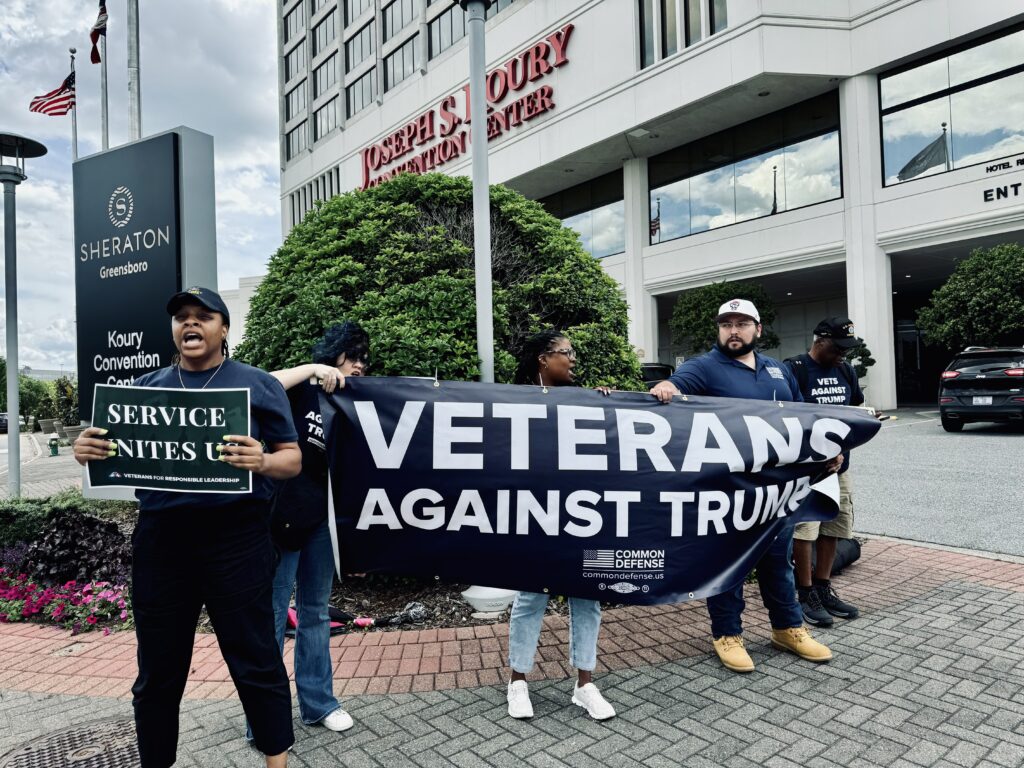
- Wear your Common Defense gear or other veteran-affiliated gear when appropriate
(e.g., Vets Against Trump, Vets for Democracy, unit hats, or service-related clothing). - Use your judgment — balance visibility with privacy and safety.
Clothing Basics
- Wear comfortable, weather-appropriate, layered clothing.
- Choose sturdy shoes for long periods of standing or walking.
- Avoid logos or identifiable clothing unless intentionally wearing veteran gear.
- Cover identifying tattoos if needed.
- Tie long hair back or into a bun.
Winter-Specific Reminder
- It’s the middle of winter — stay warm.
- If you were issued cold-weather gear when you served, now’s the time to thank Uncle Sam and pull those parkas, gloves, and layers out of storage!
Protection
- Wear a mask for privacy and to avoid inhaling chemical irritants.
- Bring goggles or glasses to protect your eyes (avoid contact lenses).
- Wear warm or compression socks if helpful.
What to bring & What to leave at home
Essentials
- Water (plastic bottle with squirt top recommended).
- Non-perishable snacks.
- Cash or change.
- Fully charged phone and portable charger.
- Emergency contact information (written down).
Health & Safety
- Basic first aid supplies (bandages, wipes, tissues).
- Earplugs.
- Any medications you need.
- Menstrual pads (not tampons) if needed.
- Extra clothing in a plastic bag.
- A whistle (to signal for help or draw attention if needed).
DO NOT BRING
- Jewelry or valuables.
- Contact lenses.
- Anything you wouldn’t want to be arrested with.
- A phone with biometrics or location tracking enabled.
During the protest: Stay safe and grounded
Situational Awareness
- Stay aware of your surroundings and potential hazards.
- Avoid escalating tense or potentially volatile situations.
- Do not engage in provocations or physical disputes.
Interactions
- Remain calm if interacting with law enforcement.
- Do not initiate physical confrontations with law enforcement.
- Be mindful of interactions with the press.
If Detained
- Know your legal rights.
- Ask specifically if you are being detained, if the answer is no, then safely leave the area and regroup as needed.
- Ask for a lawyer and remember you have the right to remain silent and refuse to answer questions.
Care For Yourself & For Each Other
- Look out for fellow vets, military families, and community members.
- Use chants, signs, and peaceful actions to convey your message.
- Use privilege responsibly to help protect others when appropriate.
- If exposed to pepper spray, use ONLY water to rinse out your eyes.